

by Annie Shields, Media Consortium blogger
Yesterday, 9th Circuit Judge Susan Bolton struck down many of the most controversial provisions in Arizona's Senate Bill 1070, including the section requiring police to ask anyone they suspect of being undocumented for proof of citizenship. It's a small victory. Today, a modified version of the bill goes into effect.
Although Bolton's decision weakened the state law, several problematic provisions remain in place, including one that allows Arizona residents to sue local police for not enforcing SB 1070, as well as one that makes it a crime to knowingly transport an undocumented immigrant under any circumstance, even in an emergency. ColorLines has a good breakdown of pending lawsuits against SB 1070.
How 287 (g) paved the way for SB 1070
As GritTV's Laura Flanders explains, both supporters and opponents of SB 1070 agree that the feds laid the groundwork for such stringent enforcement measures. Section 287 (g) of the Immigration and Nationality Act made it possible to contract law enforcement to arrest immigrants on suspicion. Arizona's then-Governor Janet Napolitano was the first to sign up for the program, and the biggest federal contract was given to none other than infamous Sheriff Joe Arpaio of Arizona's Maricopa County.
Read full article here.
July 30, 2010
Arizona's Partially Blocked Immigration Law Takes Effect
Dire Economic Prospects for the Caribbean
The Economic Survey of Latin America and the Caribbean, published today (21st July) by the United Nations Economic Commission for Latin America and the Caribbean, shows a dire situation and prospects for Caribbean countries. The cost of the global financial and economic crisis to the subregion is estimated at a huge 10% of GDP in 2009. 10 of 14 Caribbean countries experienced negative growth in that year, the worst performers being the eight countries of the Eastern Caribbean Currency Union (ECCU), which contracted by 7.3% on average. Although the external current account deficit improved and inflation was moderate, debt levels in excess of 100% of GDP were recorded for Barbados, Grenada, Jamaica, and St Kitts and Nevis. Unemployment also increased in the six Caribbean countries for which data were available.
Read full article here.
July 27, 2010
Mentally ill Guyanese fights deportation from US
A mentally ill man, who has been convicted of several offences and is fighting deportation to Guyana from the US, was recently granted a reprieve by two circuit judges who instructed the Board of Immigration Appeals (BIA) to review its standard applied to the Convention Against Torture (CAT).
However, Circuit Judges, Chagares Ambro and Antwerpen Van in their July 23 decision also agreed with the BIA that Guyanese-born Ronald Soobrian is not entitled to withholding of removal and that there was no denial of due process.
According to the decision, made public by leagle.com, Soobrian had petitioned the court for review of a final order of removal from the US. It was stated that although the man was twice granted protection under the CAT by the Immigration Judge (“IJ”), BIA reversed each time and ordered him removed. The BIA also upheld the IJ’s determination that Soobrian was not entitled to withholding of removal.
In his petition, Soobrian further argued that he was denied due process of law under the Fifth Amendment when he was forced to proceed at the removal hearing without an indefinite continuance or a determination of his competency.
Read full article here.
July 26, 2010
Where Caricom really going?

By Reginald Dumas
At their just-concluded meeting in Jamaica, the Caricom Heads of Government once again trespassed on my patience. I must say something on two aspects of this latest intrusion.
First, much has been said about Prime Minister Persad-Bissessar's apparent hard line on Trinidad and Tobago assistance to Caricom. I certainly would not have used the ATM comparison. It came over as a putdown, and no one likes to be put down, especially in public. But I have no problem at all with the principle she raised. Let me first go back a bit.
In the late 1970s, just before its precipitous collapse, the price of oil reached a level then considered unimaginably high. For many in this country, distorting Eric Williams' actual words and meaning, money had already become "no problem".
Williams himself seemed to fall victim to the distortion, and his government began — there was a strong flavour of contempt in its conduct — to dole out money to Caricom governments beating a path to its door. I say "dole out" deliberately, and I will give you an example from my time as High Commissioner to Barbados and the Eastern Caribbean (EC) in the latter part of the 1980s.
Read full article here.
British Immigration cuts on the cards
LONDON – British Prime Minister David Cameron won much attention on his recent trip to the United States with his programme of savage spending cuts. He’s also been sharpening his shears on another front: immigration.
The new coalition government will impose a permanent immigration quota next year, promising to cut levels of migration to rates last seen in the 1990s and dramatically reduce the numbers of non-Europeans allowed to live and work in Britain.
It’s long been a flagship cause for the country’s Conservative Party, which leads Britain’s governing coalition and bitterly complained in opposition that unchecked immigration had strained public services, distorted labour markets and fuelled social divides.
But business leaders have warned that the immigration quota could leave the country short in vital industries – leaving some areas without adequate medical staff, stalling efforts to meet deadlines to build new nuclear power stations, and leaving care workers needed for a growing elderly population in short supply. (AP)
July 22, 2010
Rage Against the Machine's Tom Morello's position re Arizona's SB 1070 Immigration bill

Tom Morello says that when he and his Rage Against the Machine brethren first heard about the passing of Arizona's controversial SB 1070 immigration bill, they knew they had to do something about it.
So the band decided to do what it does best: bring the sound and fury.
In tandem with Sound Strike — an organization that calls on musicians to boycott the state until SB 1070 is repealed — Rage organized a benefit show set for Friday in the band's hometown of Los Angeles. Considering the heft of the situation (and the fact that the gig will be RATM's first L.A. appearance in 10 years), well, you can expect that it's going to be a pretty monumental evening.
Read full article here.
July 20, 2010
The Creativity Crisis

'For the first time, research shows that American creativity is declining. What went wrong—and how we can fix it.'
Back in 1958, Ted Schwarzrock was an 8-year-old third grader when he became one of the “Torrance kids,” a group of nearly 400 Minneapolis children who completed a series of creativity tasks newly designed by professor E. Paul Torrance. Schwarzrock still vividly remembers the moment when a psychologist handed him a fire truck and asked, “How could you improve this toy to make it better and more fun to play with?” He recalls the psychologist being excited by his answers. In fact, the psychologist’s session notes indicate Schwarzrock rattled off 25 improvements, such as adding a removable ladder and springs to the wheels. That wasn’t the only time he impressed the scholars, who judged Schwarzrock to have “unusual visual perspective” and “an ability to synthesize diverse elements into meaningful products.”
The accepted definition of creativity is production of something original and useful, and that’s what’s reflected in the tests. There is never one right answer. To be creative requires divergent thinking (generating many unique ideas) and then convergent thinking (combining those ideas into the best result).
Read full article here
July 19, 2010
Britain's temporary cap on non-EU immigration from Monday

LONDON: Britain will enforce a temporary cap on non-EU immigration into the country starting Monday, July 19, which will put a limit on the number of applications being made.
The interim limit of 24,100 applications will be applied from July 19 to April 2011, when a permanent cap is due to come into force. The intention of enforcing the temporary cap is to prevent a rush of applicants before the permanent cap.
The interim limit will be further divided into monthly limits. Once the monthly limit has been reached, no further applications will be considered till the next month. Applications received will be held in a queue in order of the date of application till the following month's limit is opened.
Read the rest of the article here
July 14, 2010
Arizona's illegal immigration law SB 1070 is not constitutional, argues Attorney General Eric Holder

The government's lawsuit against Arizona is not about morality, it's about legality.
Attorney General Eric Holder made that argument on Sunday, arguing that the state has overstepped its bounds with SB 1070, which requires local police to inquire about the immigration status of suspected criminals.
"I understand ... the frustration of the people of Arizona and the concerns that they have with regard to the amount of illegal immigration that occurs," Holder told Bob Schieffer on CBS News' "Face the Nation."
"But the solution that the Arizona legislature came up with is inconsistent with our federal constitution," he said.
The lawsuit, filed last week, targets the controversial law which is set to go into effect on July 29.
Gov. Jan Brewer called the case "outrageous," but believed Arizona would come out the winner.
"We feel very, very confident that we stand on good ground," she said last week. "We will push forward, and believe from our heart that it is constitutional and is the right thing to do."
Read full article here
July 12, 2010
Finding the key to West Indian unity

By Ian McDonald
My heart has grown heavy and heavier yet in recent times, as I have contemplated what seems to be the gradual fading of the dream of West Indian unity.
I hope against hope that though the dream may be fading the underpinnings remain strong, awaiting only a fresh generation of leaders endowed with the power of a renewed vision.
To assist me in this hope I would love to see a list and analysis of the Caricom-wide institutions and productive regional organisations which without fanfare function day in and day out to the benefit of us all and without which our lives would be different and worse.
I cannot believe that if Caricom and all that it has built were to be dismantled tomorrow we would not be very substantially damaged in our respective nations’ well-being and in our daily lives.
Read full article here
Kamla stuns CARICOM

Whatever Caricom’s leaders might have been expecting from the stylish Prime Minister of Trinidad and Tobago with her sunny smile and nimble dance moves, they had to adjust their thinking quickly to accommodate a tough talking politician keen to forge a different agenda for Trinidad and Tobago in the region.
That was the Kamla Persad-Bissessar who quickly became the darling of the region’s cartoonists, the line renditions of her on the commentary pages of the region’s press portraying a straight talking leader who in one Observer illustration was seen waving away Jamaican politicos with a stern warning to “Move from mi stall, unoo think is a ATM machine dis!” The Jamaican translation of Prime Minister Bissessar’s metaphorical warning that Trinidad and Tobago would be seeking relationships with its Caribbean peers that delivered mutual value rather than simply handing out aid support was, in its own way, accurate.
After declaring constraints on the economy at home and warning that new fiscal regimes and reallocations might be necessary to deliver on the People Partnership’s promises, the Prime Minister could not very well appear at the 31st Caricom Summit with a continuance of the goodie bags offered by her predecessor to the region.
Prime Minister Persad-Bissessar will now have to find balances between constraint and co-operation in changing the basis of this country’s relationships with regional leaders who were sent into a tailspin by the reversal of several of Trinidad and Tobago’s previously declared initiatives in the region. Chairing the region’s National Security Committee, the Prime Minister withdrew Trinidad and Tobago’s funding for several regional programmes.
Ultimately, the PM may have to revisit at least some of those initiatives, particularly those which pool patrol and surveillance resources with our closest regional neighbours to develop stronger and more effective countermeasures to the incursions of the drug trade.
The Prime Minister’s positions at the summit will play well locally with those who feel that Trinidad and Tobago must settle its crime situation decisively before looking to the region, but the reality is that the archipelago as a whole is vulnerable to determined drug runners, and each island’s security failings will ultimately diminish the sustainable economies of its trade partners.
Jamaica in particular, is Trinidad and Tobago’s strongest trade partner and the largest recipient of this country’s manufactured products and that business relationship needs to be managed to the benefit of both countries.
This must have been foremost on the Prime Minister’s mind when she attended a luncheon with members of the Jamaican business community and promised those in attendance that she would “find amicable solutions” to the issues between business operating in both countries.
Persad-Bissessar urged Jamaican and Trinidad and Tobago’s business leaders to participate in a three-pronged effort to drive innovative improvements, deepen alliances between each nation’s business communities and to explore more meaningful business partnerships. “Rather desperately, we need to join forces to impact in a sustainable way on the international scenario, so let us not in some ways concentrate on our differences and engage in warfare in the region.”
It is incumbent on the Prime Minister and her Trade Minister to ensure that there is adequate follow through on her promises to defuse the source of those differences and review the complaints of Jamaican manufacturers and exporters in the best interests of developing strong regional trade partners. If nothing else, Prime Minister Persad-Bissessar made it clear at the Summit that Trinidad and Tobago would be retiring from its role as Caribbean financial godfather in favour of regimes that engaged more co-operative regional efforts at driving the many initiatives of Caricom that have languished over the years.
If her tough talk results in greater commitment from other strong nations in Caricom to the initiatives they have promised to support and a more robust monitoring and administration of the targets that the regional body has set itself, then the Prime Minister’s shake up of Caribbean leaders will only redound to the benefit of the region as a whole.
Caricom's diminishing credibility

Rickey Singh
THE 31st regular annual Heads of Government Conference of the Caribbean Community (CARICOM) concluded in Montego Bay, Jamaica, on Wednesday with a low offering of optimism for the immediate future progress of the now 37-year-old regional economic integration movement
Having initially raised hope midway of the four-day event for a new approach to ensure realistic management appropriate for today’s challenges from the global economic and political crisis, the leaders were to back off by closing time.
Not surprisingly, they adjourned for another “special meeting”, scheduled for September this year when they will consider likely alternative governance models for better management.
Read full article here
July 9, 2010
CSME has Made Progress - CARICOM Heads
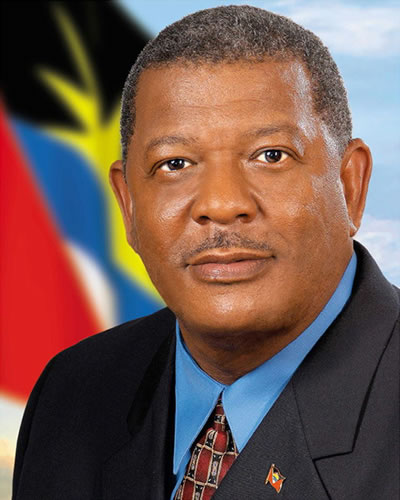
Prime Minister of Antigua and Barbuda, Hon. Dr. Baldwin Spencer has said that despite the challenges, the CARICOM Single Market and Economy (CSME) had made progress, and that the Caribbean Community was committed to taking the process forward to achieve the desired goals.
"We know that this is the only way for the future for the people of the region.we are committed to that.we are still very optimistic that whatever we have set out to do under the Treaty of Chaguaramas, we cannot derail what we have put in place, because we really don't have much of an alternative," Mr. Spencer told a press conference on the second day (July 5) of the 31st Meeting of the Conference of Heads of Government of CARICOM at the Hilton Rose Hall Resort in Montego Bay, St. James.
Read full article here
July 7, 2010
Caricom moving on with hope

By Rickey Singh
TODAY’S communiqué from the 31st annual Caribbean Community Summit that concluded last night in Montego Bay is expected to at least offer a glimmer of hope for a plan to introduce a new system of management in the governance of Caricom’s affairs.
Following a caucus session to address a plan of action on governance, there appeared to be consensus that the leaders have finally concurred to arrest the widening cynicism and disenchantment over failures to achieve goals they themselves have initiated.
Having postponed, or rather avoided, addressing the challenge of a new governance system relevant to today’s needs of the regional economic integration movement, the decision to consider a new management structure is expected to also involve the search for a new Secretary General of the now 37-year-old Community.
Read rest of article here
July 6, 2010
Feds to file lawsuit over Arizona immigration law

By BOB CHRISTIE (AP)
PHOENIX — The U.S. Justice Department is filing a lawsuit challenging the constitutionality of Arizona's new law targeting illegal immigrants, setting the stage for a clash between the federal government and state over the nation's toughest immigration crackdown.
The planned lawsuit was confirmed to The Associated Press by a Justice Department official with knowledge of the plans. The official didn't want to be identified before a public announcement planned for later Tuesday by Attorney General Eric Holder and Homeland Security secretary Janet Napolitano, a former Arizona governor.
The lawsuit will argue that Arizona's law requiring state and local police to question and possibly arrest illegal immigrants during the enforcement of other laws such as traffic stops usurps federal authority.
The government will likely seek an injunction to delay the July 29 implementation of the law until the case is resolved.
Read rest of article here

